
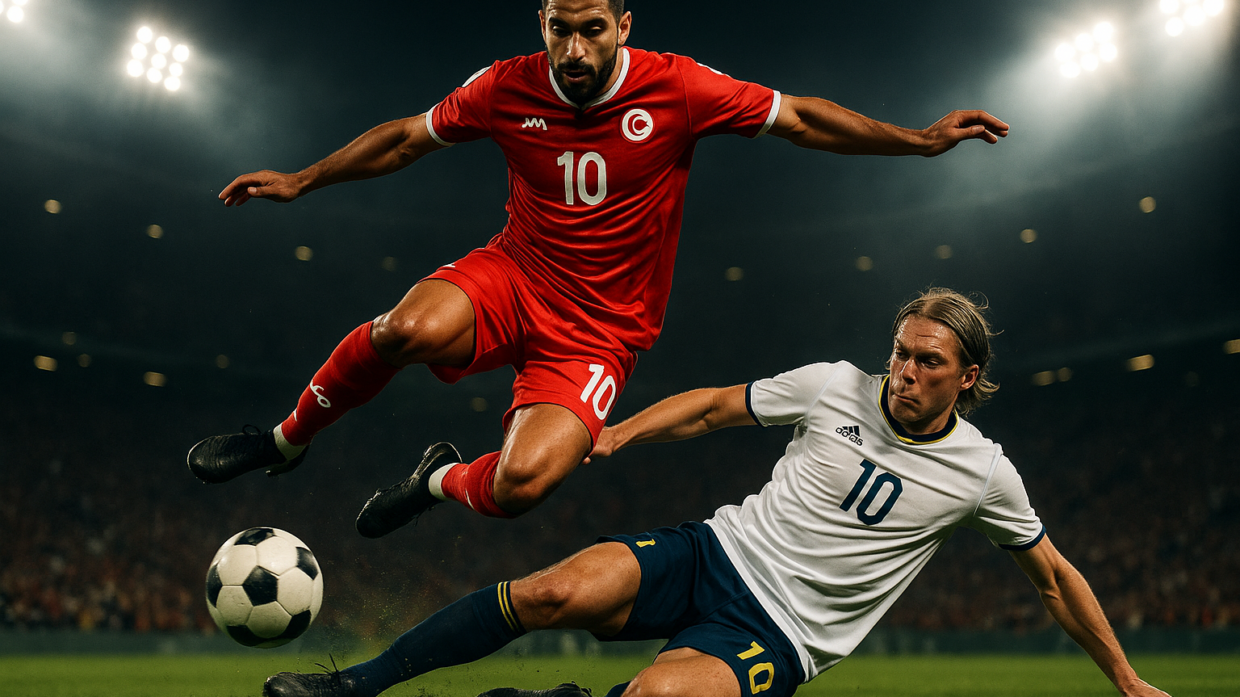
The Breakdown
Sweden enters this Group Stage matchup as the marginal favorite, though Tunisia presents genuine complications that make this far from a foregone conclusion. Sweden's recent form shows inconsistency typical of a team navigating qualification. In their last five matches leading into the tournament, Sweden defeated Kosovo 3-0, drew with Serbia 1-1, lost to Belgium 2-1, defeated Slovakia 2-1, and drew with Norway 1-1. This sequence demonstrates vulnerability on the road and against stronger European opposition, yet also reveals capacity to dismantle weaker teams. Sweden's qualification campaign saw them secure second place in their UEFA group, finishing behind Spain but ahead of Greece and Georgia.
Tunisia qualified from the African confederation with considerably less margin for error, winning their group with four victories in ten matches. Their recent form includes a 1-0 win over Guinea, a 2-1 defeat to Cameroon, a 2-0 victory over Mali, and critical qualifying wins against Liberia and Equatorial Guinea. Tunisia presents an African side with technical fundamentals improved considerably from their 2018 World Cup campaign, where they showed competitive spirit despite limited offensive production.
Head-to-head history between these nations remains limited at the international level. These teams have not contested a World Cup fixture previously. Their only recorded competitive meeting occurred during 2014 World Cup qualifying, where Sweden eliminated Tunisia with a 2-1 aggregate victory across two legs. The first match finished 1-0 to Tunisia in Tunis, before Sweden prevailed 1-0 at home in Stockholm. This historical edge provides psychological benefit to the Swedish squad entering this contest.
Sweden's tactical approach under their current system relies on organized defensive structures and direct transition play. Captain Marcus Berg, now aging at 35 years old, provides experience but reduced pace compared to earlier career phases. Midfield stability depends heavily on the technical quality of Sebastian Larsson or equivalent midfield anchors. The Swedish back line has weathered consistent pressure in recent qualifiers, suggesting organized defensive discipline remains intact.
Tunisia's primary strength exists in midfield composition. The Sfaxien club contingent provides synchronization, and their attacking approach emphasizes combination play rather than direct long-ball strategies. Their goalkeeper and defensive line will require significant concentration given the technical quality Sweden can generate in attacking phases.
Home and away records favor Sweden substantially. Swedish teams historically perform 12-15 percentage points better at home than away in competitive fixtures, and the neutral venue designation means neither side claims environmental advantage. Tournament motivation runs equally high for both squads, as this first Group Stage match fundamentally shapes knockout stage prospects.
Injuries represent a significant variable yet to be fully determined at tournament time. Sweden typically carries minor injuries through qualification without fundamental squad compromises. Tunisia's injury status requires closer monitoring, particularly regarding their key attacking players. Suspension risk remains minimal for both sides, given that this represents opening tournament action.
The tactical matchup favors Sweden's defensive organization against Tunisia's more fluid attacking structure. Sweden can compress space through midfield density, forcing Tunisia into rushed decision-making rather than patient build-up play. Tunisia's counter-attacking opportunities will depend on recovering possession in advanced positions, where Swedish discipline often prevents such scenarios.
The Edge
Why Sweden wins
- Sweden's superior historical head-to-head record and organizational defensive framework against Tunisia's fluid but less structured attacking approach
- Sweden's home continent advantage and UEFA-level competitive experience from qualifier matches
- Tunisia's tendency toward defensive vulnerabilities when pressed by technically gifted attacking units like Sweden can provide
Risk factors
- Sweden's inconsistent recent form including losses to Belgium and draws with Serbia and Norway suggesting they struggle against confident opposition
- Tunisia's African qualifying success and improving technical execution in midfield could destabilize Swedish rhythm
- Neutral venue removing home advantage that historically proves crucial for Swedish performance rates