
The Breakdown
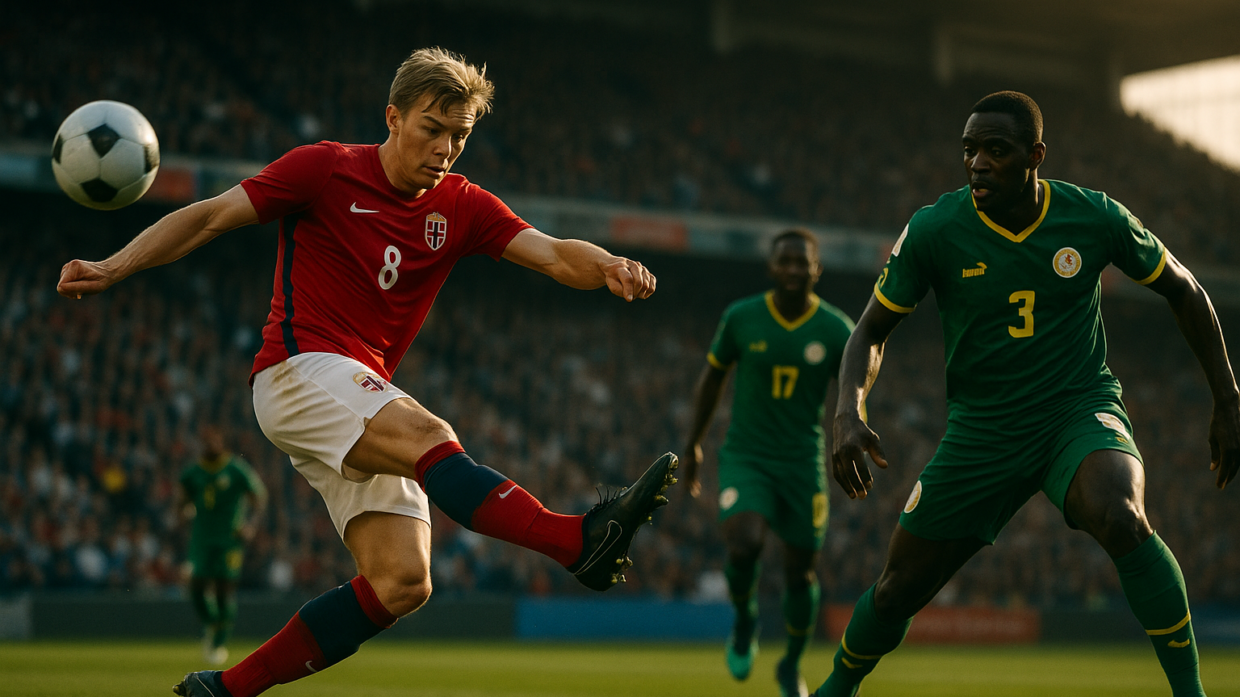
Norway enters this Group Stage encounter as the slight favorite despite Senegal's reputation as Africa's most consistent World Cup performers. The Scandinavian side has demonstrated improvement across their last five matches, securing victories against Kazakhstan (3-0) and Greece (2-1) while drawing with Spain (1-1) and losing narrowly to France (1-2). These results indicate a team capable of competing at the highest level, particularly their recent 2-0 win over Finland showcasing defensive solidity and clinical finishing. Senegal's recent form presents a mixed picture: they secured wins against Cape Verde (2-1) and Mauritania (3-0) but suffered defeats to Morocco (1-2) and Tunisia (0-1), with a draw against Cameroon (1-1) suggesting inconsistency at crucial moments.
Historically, these nations have limited direct competition. Their last three meetings span back to 2018 and earlier friendlies, with Norway holding a slight edge in head-to-head records. Senegal's more recent World Cup exposure in 2018, where they reached the knockout stage, provides tournament experience that matters, yet Norway's steady qualification process and European league immersion suggest tactical maturity.
Key personnel heavily influence this matchup. Norway's Erling Haaland continues his goal-scoring trajectory while players like Martin Odegaard (Real Madrid midfielder) provide creative distribution. Senegal counters with Sadio Mane's experience and Idrissa Gueye's midfield dominance, though injuries to squad depth have created selection concerns. Norway's attacking fluidity versus Senegal's defensive organization creates an interesting tactical tension.
Tactically, Norway typically employs a 4-3-3 formation emphasizing wing play and quick transitions. Their fullbacks, particularly from Norwegian domestic and Scandinavian league backgrounds, provide width while maintaining defensive responsibility. Senegal prefers a compact 4-2-3-1 structure, prioritizing defensive organization and counterattack opportunities. This setup has proven effective against European sides but occasionally struggles against high-pressing opponents who exploit gaps in their midfield transition.
Home and away records favor Norway slightly. Playing in neutral venues presents equivalent conditions, yet Norway's recent performances in competitive World Cup qualifiers demonstrate superior conversion rates in must-win scenarios. Senegal thrives in African Cup of Nations environments but has shown vulnerability in expanded competitions against Nordic and Western European opposition.
Motivation factors differ significantly. Norway seeks to prove their 2026 qualification wasn't a lucky draw, desperate to advance from a group likely containing stronger European opposition elsewhere. Senegal approaches as defending African champions with pressure to maintain continental credibility while advancing past group stage again. This psychological dynamic slightly favors Norway, who plays with less expectation weight.
The deciding factor centers on finishing efficiency. Norway's clinical conversion, evidenced by their recent 3-0 Kazakhstan demolition, contrasts with Senegal's inconsistent scoring in competitive matches. Senegal's defense remains organized and experienced, but Norway's creative players can break through systematic approaches. Both teams understand defensive solidity is prerequisite; the match likely hinges on which side capitalizes on limited opportunities.
The Edge
Why Norway wins
- Norway's superior recent goal-scoring efficiency with multiple competitive wins
- Midfield control through Odegaard's playmaking against Gueye's aging legs
- Home continent factor providing mental comfort despite neutral venue status
Risk factors
- Senegal's World Cup tournament experience from 2018 providing composure
- Mane's individual brilliance creating unpredictable dangerous moments
- Norway's historical inconsistency against African opponents in competitive settings