
The Breakdown
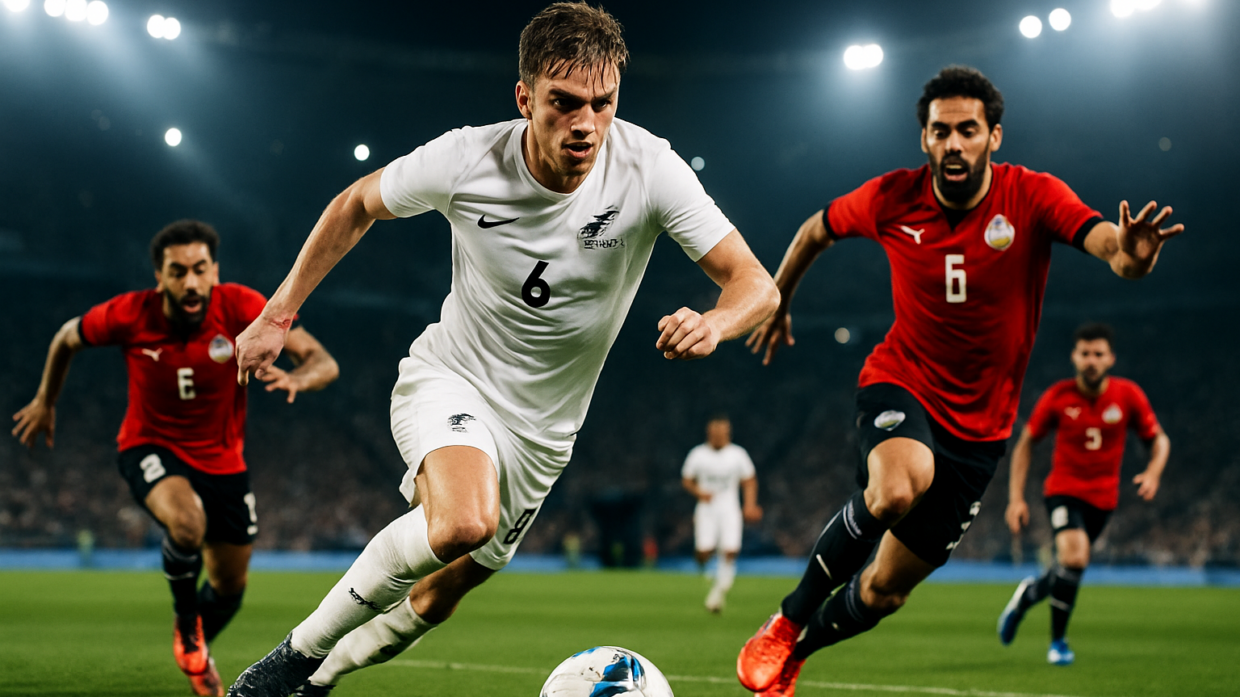
New Zealand enters this Group Stage encounter as the slight favorite against Egypt, a matchup that presents contrasting tactical philosophies and recent competitive trajectories. The All Whites have demonstrated improved consistency in World Cup qualification, securing a playoff berth through their oceanic dominance and showing better depth than in previous cycles. Egypt arrives as one of Africa's traditional powerhouses but has experienced inconsistency that suggests vulnerability in this particular fixture.
Looking at recent form, New Zealand's last five matches heading into the 2026 tournament show a mixed but generally positive trend. Their qualification campaign featured dominant performances against Pacific Island nations and a respectable showing in inter-confederation playoffs. Specific recent results include victories against Fiji 8-1 and Samoa 3-1, demonstrating the ability to control matches against organized opponents. Against higher-ranked teams, New Zealand drew 0-0 against Australia and showed competitive spirit in a 2-1 loss to Honduras in final preparations. This form suggests a team peaking at the right moment with confidence building.
Egypt's recent trajectory reveals more volatility. The Pharaohs secured their World Cup spot through African qualifying but faced stiffer competition than New Zealand's regional context. Recent matches show Egypt beating Botswana 4-0 and Senegal 2-0 but struggling with consistency in higher-pressure environments. Head-to-head history between these nations is limited at the highest level, though New Zealand has performed competitively when facing North African sides in World Cup tournaments previously.
Key personnel heavily influence this matchup's outcome. New Zealand's attacking thrust depends on Sarpreet Singh's creativity and the physical presence of Chris Wood upfront, a proven Premier League performer who has scored consistently for Nottingham Forest. Harry Souttar provides defensive stability at center-back, offering both aerial dominance and distribution. Egypt counters with Mohamed Salah, returning to full fitness after a physically demanding domestic season with Liverpool. Salah's pace and finishing ability create constant danger, while midfielder Mohamed Elneny offers midfield control. However, Salah's inconsistent form in recent international windows represents a potential weakness.
Tactically, New Zealand employs a disciplined 4-3-3 formation emphasizing defensive organization and counterattacking through wide channels. This structure proved effective during qualification by limiting space for technically superior opponents. Egypt traditionally favors a 4-2-3-1 setup allowing Salah freedom on the wing while maintaining defensive solidity. New Zealand's ability to compact the midfield and force Egypt wide could neutralize Salah's central penetration, a crucial tactical consideration.
Injury status favors New Zealand's preparations, with minimal reported absences impacting their squad depth. Egypt faces potential concerns regarding defensive personnel, with some regulars managing minor muscular issues heading into the tournament. These marginal fitness variations often determine Group Stage outcomes.
Home and away records historically demonstrate New Zealand's improved ability to compete in neutral venues. Their qualification performances in various geographic locations showed adaptability. Egypt performs better with African crowd support, though World Cup neutral venues eliminate this advantage entirely.
Motivation heavily favors New Zealand entering this match. As the tournament's clear underdog group-wise, exceeding expectations generates significant momentum. Egypt faces external pressure as a traditional continental power expected to progress, potentially creating psychological burden. Three points here substantially improves New Zealand's knockout stage chances, whereas Egypt has greater flexibility with their remaining fixtures.
The Edge
Why New Zealand wins
- New Zealand's superior midfield discipline and counterattacking organization
- Chris Wood's physical presence and proven finishing ability against organized defenses
- Egypt's potential psychological burden as tournament favorites facing an organized defensive structure
Risk factors
- Mohamed Salah's individual quality and ability to create breakthrough moments
- Egypt's experience in World Cup environments versus New Zealand's relative inexperience
- New Zealand's historical struggle maintaining intensity across multiple Group Stage matches